As an Amazon Associate this site earns from qualifying purchases.
Quick Picks
| Boot | Safety toe | Standout published spec | Price |
|---|---|---|---|
| Thorogood American Heritage 8” Soft Toe Work Boots for Men Made from Premium Leather with Slip-Resistant Wedge Outsole and Shock-Absorbing Insole; EH Rated | Soft toe (no safety toe) | Goodyear storm welt construction; ASTM F2892-18 EH | Check Price on Amazon |
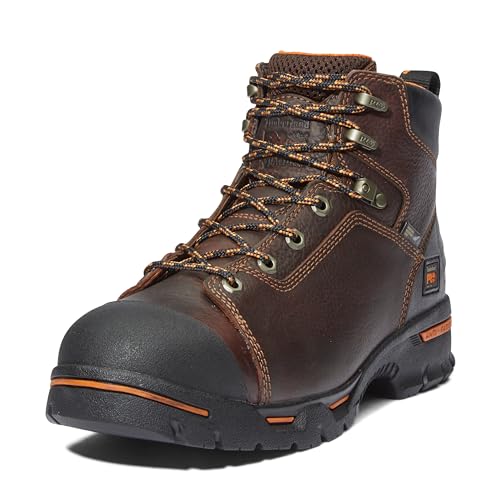
| Timberland PRO Men's Endurance 6 Inch Steel Safety Toe Puncture Resistant Industrial Work Boot | Steel | Steel shank; electrical hazard protection | Check Price on Amazon |
| Wolverine Men'sOverpass 6" Mid Composite Toe Waterproof Work Boot | Composite | ASTM F2413-11 M I/75 C/75 EH; waterproof leather | Check Price on Amazon |
| NORTIV 8 Waterproof Steel Toe Work Boots for Men | Steel | Toe to ASTM 2413-18; outsole to ASTM F3445-13 | Check Price on Amazon |
| KEEN Utility Men's Gibson Boot (Carbon-Fiber Toe) Belgian/Gum 10.5 Medium | Carbon fiber | ASTM F3445-21 and F2413-18 M I/75 C/75 ESD/SD 35 | Check Price on Amazon |
| Hogent Steel Toe Boots for Men | Steel | Kevlar puncture-resistant layer; EVA sole | Check Price on Amazon |
Disclosure: We earn a small commission from qualifying Amazon purchases at no extra cost to you.
As an Amazon Associate, we earn from qualifying purchases.Last Updated: September 2026
Here's the thing about the "are expensive work boots worth it" question: almost nobody is actually asking about price. They're asking whether the extra money buys a boot that survives a second season on a jobsite, or just a better-known logo stamped on the same imported sole unit. Price alone cannot answer that. Construction method and published safety ratings can.
This guide teaches you to read a work boot listing the way a safety manager reads a spec sheet. By the end you'll know which line items genuinely change durability and protection, which ones are marketing language, and how to tell the difference on an Amazon page before you click.
What you'll learn:
- The four safety-toe types and what each one actually certifies
- Why sole attachment method is the single biggest driver of long-term value
- How to read ASTM designations instead of trusting the word "safety"
- The waterproofing claim that trips up more buyers than any other
- Which boot in this guide fits which job description
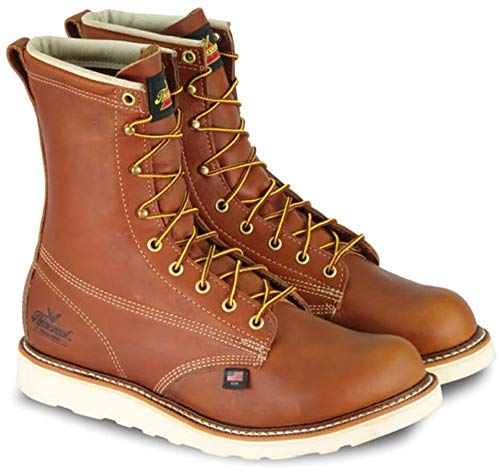
- AMERICAN MADE with USA and globally sourced components by the skilled craftsmen and women at Thorogood’s US plants
- PREMIUM OIL-TANNED FULL-GRAIN LEATHER BOOTS in Thorogood's plain toe work boot design in Tobacco Brown (814-4364) and Black Walnut (814-4269) are both comfortable and hold up to
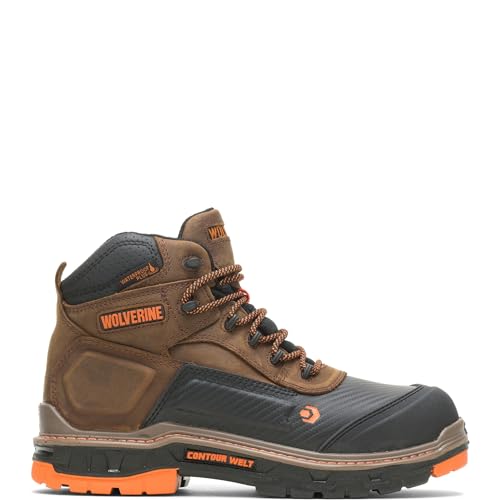
- Flexible, athletic contour welt construction moves with you by bending and flexing at essential points
- Removable ortholite cushioned footbed for all-day comfort
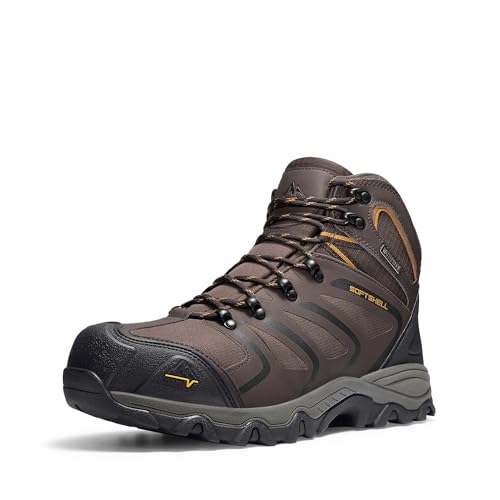
- Enhanced Toe Protection: These work boots for men feature a steel toe and rubber toe cap meets ASTM 2413-18 standard, that protect your feet from falling objects and accidental
- Waterproof Upper: With a static waterproof upper that lasts for up to 4 hours, these men's steel toe boots keep feet dry and comfortable even in wet and challenging work
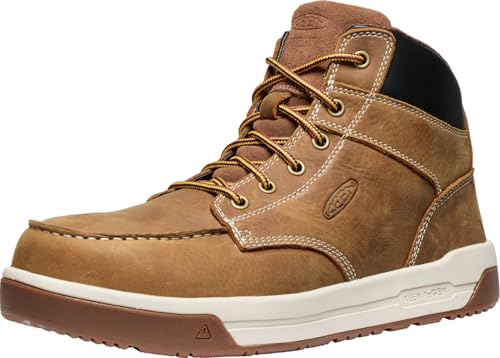
- Grip, guard, and walk in style wearing the KEEN Utility Gibson Boot. Crafted from full-grain water-resistant leather upper, mesh liner provides breathability to help keep feet
- Carbon fiber safety toe meets ASTM F3445-21 and F2413-18 M I/75 C/75 ESD/SD (Static Dissipative) 35 standards
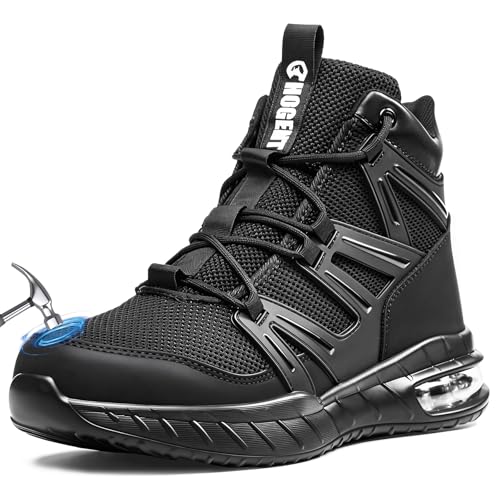
- 【STEEL TOE PROTECTION】: Hogent steel toe boots for men feature a protective steel toe cap for demanding jobs; high-top coverage adds ankle support; these steel toe shoes combine
- 【PUNCTURE-RESISTANT SUPPORT】: Built with a lightweight KEVLAR layer to help protect feet from nails and sharp objects; these work boots for men offer flexible support and
The Short Answer: What Higher-Tier Construction Actually Buys
A more expensive work boot generally buys you three things: a sole attachment you can have rebuilt, a documented ASTM certification for every protective claim, and a footbed and shank system designed for standing shifts rather than occasional wear. A cheaper boot can absolutely match one of those three. It rarely matches all three at once.
That framing matters because "expensive" is not a specification. Two boots can carry identical ASTM toe ratings and still differ enormously in whether the outsole can be replaced when it wears through. That is the durability question hiding inside the price question.
Types of Work Boots Explained
Work boots split along two axes that buyers constantly conflate: what protects your toes, and how the sole is joined to the upper. The first determines whether you pass a site safety check. The second determines whether the boot is a one-season purchase.
| Type | What it is | Example in this guide | Tradeoff to weigh |
|---|---|---|---|
| Soft toe | No protective toe cap; comfort and support only | Thorogood American Heritage 8” Soft Toe Work Boots for Men Made from Premium Leather with Slip-Resistant Wedge Outsole and Shock-Absorbing Insole; EH Rated | Will not satisfy a site that mandates impact/compression protection |
| Steel toe | Steel cap rated for impact and compression | Timberland PRO Men's Endurance 6 Inch Steel Safety Toe Puncture Resistant Industrial Work Boot | Conducts temperature and sets off metal detectors |
| Composite toe | Non-metallic cap meeting the same ASTM impact/compression classes | Wolverine Men'sOverpass 6" Mid Composite Toe Waterproof Work Boot | The cap itself is non-metallic; the rest of the boot's hardware is a separate question |
| Carbon fiber toe | Non-metallic cap using carbon fiber | KEEN Utility Men's Gibson Boot (Carbon-Fiber Toe) Belgian/Gum 10.5 Medium | Non-metallic, and here paired with a static-dissipative rating |
| Goodyear welt | Upper stitched to a welt, allowing rebuilds | Thorogood American Heritage 8” Soft Toe Work Boots | Resoling costs money, but extends service life |
| Direct attach / cemented | Outsole bonded directly to the upper | KEEN Utility Men's Gibson Boot | Lighter and flexible, but not described as rebuildable |
If you want the deeper breakdown of cap materials, see our steel toe vs composite toe comparison.
Key Features to Look For, Ranked by Importance
1. A safety rating that matches the actual hazard
Read the ASTM string, not the adjective. Wolverine's listing rates the Overpass composite toe to ASTM F2413-11 M I/75 C/75 EH [S5]. KEEN states the Gibson's carbon fiber safety toe meets ASTM F3445-21 and F2413-18 M I/75 C/75 ESD/SD (Static Dissipative) 35 [S7]. NORTIV 8 states the steel toe and rubber toe cap meet ASTM 2413-18 [S6]. Those are checkable designations. "Protective toe cap" on its own is not.
A listing that cites a designation has told you more than one that only says "safety toe."
2. Sole attachment and whether the boot is serviceable
Thorogood's listing states the American Heritage 8-inch boot uses Goodyear storm welt construction, which the brand describes as providing wear resistance and a moisture seal between upper and midsole and making the boots fully serviceable [S3]. Wolverine describes the Overpass construction as a flexible, athletic contour welt that bends and flexes at essential points [S5]. KEEN specifies direct attached outsole construction for the Gibson [S7].
An inference, stated as one: a welted boot that a cobbler can rebuild spreads its cost over more seasons than a bonded sole that gets replaced whole. If you burn through outsoles on concrete or roofing, that difference is the entire value argument for spending more.
3. Electrical hazard and static ratings, read literally
Thorogood states these MAXWear Wedge boots meet ASTM F2892-18 electrical hazard resistance safety standards [S3]. Timberland PRO's listing for the Endurance lists electrical hazard protection [S4]. Wolverine's ASTM string ends in EH [S5].
EH is a secondary, dry-condition safeguard against incidental contact. It is not insulation, and none of these listings describe them as live-line footwear. Treat the rating as one layer inside a lockout procedure, not a substitute for one.
4. Underfoot puncture protection
Two very different approaches show up here. Timberland PRO's product title identifies the Endurance as a 6-inch steel safety toe, puncture resistant industrial work boot [S4]. Hogent's listing describes a lightweight KEVLAR layer to help protect feet from nails and sharp objects [S8].
Worth noting for both: the supplied listing information for the Timberland PRO Endurance does not state which ASTM standard numbers its toe or its puncture resistance meets [S4], and the supplied Hogent listing does not cite an ASTM standard number for the steel toe or the Kevlar layer [S8]. If your site inspector wants a designation, verify it on the boot's own tongue label before the return window closes.
5. Slip and chemical resistance
KEEN publishes the most granular traction documentation of the six: a slip resistant rubber outsole that meets or exceeds ASTM F2913-19 SATRA and ASTM F1677-96 Mark II non-slip testing standards, plus ASTM D471-06 903# oil and isooctane chemical resistance [S7]. NORTIV 8 states its lugged rubber outsole meets ASTM F3445-13 for traction and stability [S6]. Wolverine describes its outsole as slip, oil, water, abrasion, and chemical-resistant [S5].
6. Footbed, shank and support architecture
Thorogood pairs a removable footbed with a Poron Comfort Cushion insole the brand describes as dual-density cushioning using air-permeable open cells, plus fiberglass shank construction and 8-inch ankle support [S3]. Timberland PRO lists a steel shank for structural support and an Anti-Fatigue Technology comfort system that absorbs shock and returns energy back to the foot [S4]. Wolverine uses a removable OrthoLite cushioned footbed [S5], and KEEN a removable metatomical insole [S7].
A shank is the piece that keeps the boot from folding across ladder rungs. If you spend hours on rungs, scaffolding or rebar, that line item is not a luxury.
Common Mistakes to Avoid
- Reading "waterproof" as unconditional. NORTIV 8's listing describes a static waterproof upper that lasts for up to 4 hours [S6]. That is a stated duration, not permanent submersion resistance, and it is exactly the kind of qualifier buyers skim past.
- Confusing water-resistant with waterproof. KEEN describes the Gibson upper as full-grain water-resistant leather [S7], while Wolverine describes premium waterproof leather on the Overpass [S5]. Different words, different expectations in a wet trench.
- Assuming any work boot has a safety toe. The Thorogood American Heritage in this guide is identified in its own product title as a soft toe boot [S3]. Construction and toe protection are separate things to check.
- Treating a steel toe as puncture protection. A toe cap covers your toes. Sole penetration is a different hazard needing a plate or Kevlar layer.
- Buying for break-in rather than fit. Leather relaxes; it does not change length. Our work boot sizing guide covers width and volume issues that ruin otherwise correct purchases.
- Ignoring serviceability on a heavy-wear job. If you replace boots annually, the rebuildable construction argument is the one that actually pays back.
Budget Considerations: How to Decide What to Spend
Forget round-number tiers. Ask four questions instead, in this order.
- What does your site require? If a written policy demands impact and compression protection, any soft toe boot is disqualified regardless of quality.
- How fast do you destroy outsoles? Fast wear favors welted, serviceable construction. Light wear does not.
- How wet, oily or chemical is the floor? That pushes you toward listings that publish outsole standards rather than adjectives.
- How many hours are you standing? Removable cushioned footbeds and a defined shank matter more per dollar than color options.
Our Top Recommendations
Thorogood American Heritage 8” Soft Toe Work Boots for Men Made from Premium Leather with Slip-Resistant Wedge Outsole and Shock-Absorbing Insole; EH Rated — Best for buyers who want welted construction they can have rebuilt
Thorogood's listing sells construction rather than gadgetry. The listing describes premium oil-tanned full-grain leather in a plain toe design, Goodyear storm welt construction, a fiberglass shank, and 8-inch ankle support [S3]. It also states the boots are American made with USA and globally sourced components at Thorogood's US plants [S3].
Strengths: Welt construction the brand describes as fully serviceable, ASTM F2892-18 EH resistance, removable dual-density Poron footbed [S3].
Limitations to weigh: It is a soft toe boot per its own title, so it will not satisfy a mandated safety-toe site [S3]. Thorogood's claim of "the most comfortable mens work boot out there" is seller marketing language, not an independent finding [S3].
Verdict: Carpenters, electricians and tradesmen on sites without a toe-cap mandate get the strongest longevity case here.
Timberland PRO Men's Endurance 6 Inch Steel Safety Toe Puncture Resistant Industrial Work Boot — Best for steel shank support on industrial floors
The Endurance targets the classic industrial profile: a steel safety toe up front and a steel shank for rigid support through the arch. Timberland PRO's listing lists a steel shank for structural support, electrical hazard protection, dual-purpose top hardware for lacing customization, and an Anti-Fatigue Technology comfort system that absorbs shock and returns energy back to the foot [S4].
Strengths: Steel shank plus a puncture resistant build named in the product title, and lacing hardware that lets you tune ankle lockdown [S4].
Limitations to weigh: For the Timberland PRO Men's Endurance 6 Inch Steel Safety Toe Puncture Resistant Industrial Work Boot, the supplied listing information does not state which ASTM standard numbers its toe or its puncture resistance meets [S4], does not describe the form the puncture resistance takes [S4], and does not describe the upper as waterproof [S4].
Verdict: Best suited to demolition, scrap handling and industrial floors where nails and debris are the daily hazard.
Wolverine Men'sOverpass 6" Mid Composite Toe Waterproof Work Boot — Best for documented ASTM F2413-11 composite-toe protection in wet work
If you need a documented composite safety toe alongside waterproof leather, this listing states both. Wolverine rates the composite toe to ASTM F2413-11 M I/75 C/75 EH and pairs premium waterproof leather with an abrasion resistant toe and a removable OrthoLite cushioned footbed [S5]. The outsole is described as slip, oil, water, abrasion, and chemical-resistant [S5].
Strengths: Full I/75 C/75 impact and compression classes plus EH, waterproof leather, and a flexible contour welt Wolverine says bends at essential points [S5].
Limitations to weigh: At 6 inches it offers less shaft coverage than an 8-inch boot, and the supplied listing does not state a puncture-resistant plate [S5].
Verdict: A strong fit for utility crews, landscapers and anyone who needs a documented composite safety toe together with wet-weather protection. The supplied Wolverine Men'sOverpass 6" Mid Composite Toe Waterproof Work Boot listing describes the toe as composite but says nothing about the shank or other hardware, so it does not establish that the whole boot is metal-free [S5]. More options in our best waterproof work boots roundup.
NORTIV 8 Waterproof Steel Toe Work Boots for Men — Best for buyers who want a cited ASTM toe and outsole designation
What earns this boot a spot is that it names standards instead of gesturing at them. NORTIV 8 states the steel toe and rubber toe cap meet ASTM 2413-18, and that the lugged rubber outsole meets ASTM F3445-13 for traction and stability across terrains [S6]. Inside, the listing describes a mesh-covered EVA insole and a lightweight EVA midsole intended to relieve fatigue from prolonged standing [S6].
Strengths: Named toe and outsole designations, lugged traction, and a build the listing positions for construction, warehouses, mines, welding, carpentry and landscaping [S6].
Limitations to weigh: The waterproofing is qualified: the listing describes a static waterproof upper that lasts for up to 4 hours [S6]. Read that as shift-limited weather protection, not a wading boot. The supplied listing also does not state an EH rating [S6].
Verdict: Sensible for warehouse and general site work where toe protection is mandatory and standing water is occasional rather than constant.
KEEN Utility Men's Gibson Boot (Carbon-Fiber Toe) Belgian/Gum 10.5 Medium — Best for static-dissipative and chemical-resistance requirements
The Gibson publishes the most complete standards list of the six. KEEN states the carbon fiber safety toe meets ASTM F3445-21 and F2413-18 M I/75 C/75 ESD/SD (Static Dissipative) 35, that the boot meets ASTM D471-06 903# oil and isooctane chemical resistance standards, and that the slip resistant rubber outsole meets or exceeds ASTM F2913-19 SATRA and ASTM F1677-96 Mark II non-slip testing standards [S7]. The upper is full-grain water-resistant leather with a mesh liner and a removable metatomical insole [S7].
Strengths: Non-metallic toe, a static-dissipative designation for electronics and controlled environments, and documented slip and chemical resistance [S7].
Limitations to weigh: The leather is described as water-resistant, not waterproof [S7]. The listing specifies direct attached outsole construction and does not describe the boot as resoleable or serviceable [S7].
Verdict: The pick when a job spec names ESD/SD or chemical exposure and you can accept a bonded sole.
Hogent Steel Toe Boots for Men — Best for lightweight EVA cushioning with a Kevlar puncture layer
This one is built around weight and flex rather than rebuildability. Hogent's listing describes a protective steel toe cap, a lightweight KEVLAR layer to help protect feet from nails and sharp objects, responsive air cushioning with a breathable lining, and lightweight EVA soles [S8]. The listing describes a high-top design for added ankle support and positions the boots for construction, warehouses, manufacturing, workshops, farming and delivery work [S8].
Strengths: Combines a steel cap with an underfoot Kevlar layer in a lightweight EVA-soled package, which is an unusual pairing to find together [S8].
Limitations to weigh: The supplied listing does not cite an ASTM standard number for the steel toe or the Kevlar layer [S8], and it does not state EH, waterproof or slip-resistance ratings [S8]. If your employer requires documented designations, confirm the tongue label before relying on it.
Verdict: Aimed at delivery, warehouse and light-duty site work where all-day weight matters more than a paperwork trail.
How to Get the Best Deal on Amazon
- Price the exact variant. Work boot listings price separately by size, width and colorway, so confirm you are viewing the size and color you'll actually wear.
- Buy inside a real return window. Fit is the failure point no spec sheet solves; order, try them indoors on carpet, and send back anything that heel-slips.
- Verify the label, not the bullet. Certification data is printed on the boot's tongue label. Check it against the listing while the boot is still returnable.
- Check safety notices before you commit. The U.S. Consumer Product Safety Commission publishes recall notices and safety information for consumer products at cpsc.gov [S1], and USA.gov maintains consumer protection resources covering purchases and complaints [S2].
- Don't chase a discount into the wrong category. A cheaper soft toe boot is not a bargain if your site requires a rated toe.
Maintenance and Care Tips
Care is where the expensive-versus-cheap gap either closes or widens, because neglected premium leather fails faster than maintained budget leather.
- Pull the footbeds out to dry. Thorogood, Wolverine and KEEN all describe removable footbeds or insoles in these models [S3][S5][S7], so remove them at the end of a wet shift instead of leaving moisture trapped.
- Respect the stated waterproofing limit. With NORTIV 8's stated up-to-4-hour static waterproof upper [S6], dry the boots fully between exposures rather than assuming the treatment resets itself.
- Clean oil-tanned leather before conditioning. Thorogood describes the American Heritage upper as premium oil-tanned full-grain leather [S3]; follow the manufacturer's own care instructions for products and intervals rather than improvising a treatment.
- Rotate pairs if you can. Two pairs alternating dry more completely than one pair worn daily.
- Watch the outsole tread, not the upper. On a welted boot the upper often outlives the sole, which is the whole point of Thorogood's serviceable construction claim [S3].
How We Research
This website does not run a lab and does not perform product research. Every product statement above comes from two source types: Amazon Creators API verified product records and the product listing feature bullets published on each ASIN, all retrieved on 2026-09-08.
The analytical work is comparative reading. We line up what each manufacturer publishes, note which ASTM designations are named versus merely implied, flag qualifiers like "water-resistant" or "up to 4 hours," and say plainly when a field is absent from the supplied listing rather than guessing at it. Where a listing omits a rating, that means it is not stated in the information supplied here, not that the manufacturer never publishes it elsewhere.
Final Verdict
So, are expensive work boots worth it? Conditionally yes, and the condition is specific: they're worth it when the extra money buys rebuildable construction and documented certifications you actually need.
If you're on a site with no toe-cap mandate and you destroy soles faster than uppers, the Goodyear storm welt, serviceable construction Thorogood publishes for the Thorogood American Heritage 8” Soft Toe Work Boots for Men Made from is the construction spec to weigh here [S3].
If you need a documented safety toe, the Wolverine Men'sOverpass 6" Mid Composite Toe Waterproof Work Boot publishes ASTM F2413-11 M I/75 C/75 EH with waterproof leather, which covers the most common combination of requirements [S5]. For ESD or chemical exposure specifically, the KEEN Utility Men's Gibson Boot's stated ESD/SD 35 and ASTM D471-06 chemical resistance are the deciding specs [S7].
And the honest counterpoint: a boot that names its standards, like the NORTIV 8 Waterproof Steel Toe Work Boots for Men with its stated ASTM 2413-18 toe and ASTM F3445-13 outsole [S6], tells you what the seller states it meets today. The supplied listing for that boot does not describe its sole as rebuildable after it wears through [S6].
Frequently Asked Questions
Do expensive work boots last longer than cheap ones?
Not automatically, but construction method predicts it better than price. A welted boot such as the Thorogood American Heritage, which the brand describes as fully serviceable with Goodyear storm welt construction [S3], can be rebuilt, while a direct attached outsole like the one KEEN specifies for the Gibson is bonded to the upper [S7].
Is a steel toe better than a composite or carbon fiber toe?
Not inherently. Wolverine rates its composite toe to ASTM F2413-11 M I/75 C/75 EH [S5] and KEEN rates its carbon fiber toe to ASTM F3445-21 and F2413-18 M I/75 C/75 ESD/SD 35 [S7], which are the same impact and compression classes you'd expect from steel. Choose non-metallic if you pass metal detectors or need static-dissipative footwear.
What does the EH rating actually protect against?
Electrical hazard resistance is a secondary, dry-condition safeguard against incidental contact with live circuits. Thorogood states its MAXWear Wedge boots meet ASTM F2892-18 electrical hazard resistance standards [S3] and Timberland PRO lists electrical hazard protection on the Endurance [S4], but neither listing describes the boots as insulation for live work.
Does waterproof mean I can stand in water all day?
Read the qualifier. NORTIV 8's listing describes a static waterproof upper that lasts for up to 4 hours [S6], which is a stated limit rather than open-ended submersion protection, and KEEN describes the Gibson's leather as water-resistant rather than waterproof [S7].
Do I need puncture resistance underfoot?
If you walk demolition debris, framing floors or scrap yards, yes. Timberland PRO's product title identifies the Endurance as a puncture resistant industrial work boot [S4], and Hogent describes a lightweight Kevlar layer intended to protect against nails and sharp objects [S8].
How do I verify a boot's safety rating before I rely on it?
Check the ASTM designation printed on the boot's tongue label against the listing, and do it before your return window closes. That matters most where a listing does not name a standard number, as with the supplied Hogent record [S8], and you can review recall and safety information at cpsc.gov [S1].
Sources and Methodology
No one at this website wore, flexed, soaked or resoled any of these six boots, and there is no lab behind this page. What sits behind it is a close reading of Amazon Creators API verified product records and each listing's published feature bullets, retrieved on 2026-09-08, compared side by side to separate named ASTM designations from unqualified marketing adjectives.
For work boots specifically, that reading goes further than it would in most categories, because some protective footwear listings cite published standards by number while others do not. Where a designation is named you can compare it with a written site requirement; where none is named, the supplied listing simply does not state one. It cannot tell you how a given last fits your foot, how the leather creases after a winter, or how long a particular outsole survives your floor.