As an Amazon Associate this site earns from qualifying purchases.
Quick Picks
| Boot | Safety toe (per listing) | Rating codes the listing states | Best suited to | Price |
|---|---|---|---|---|
| ROCKROOSTER Mens Work Boots | Steel toe | ASTM F2413-18 I/75 C/75 SD | Workers whose site rules call for static dissipative footwear | Check Price on Amazon |
| OUXX 5" Steel Toe Boots For Men | Steel toe | ASTM F2413-18 I/75 C/75, plus EH | Wet, debris-strewn sites where puncture risk is real | Check Price on Amazon |
| MWORK 6" Work Boots for Men | Composite safety toe | ASTM F2413-18 compliant, plus EH | Long concrete shifts where toe weight matters | Check Price on Amazon |
Disclosure: We earn a small commission from qualifying Amazon purchases at no extra cost to you.
As an Amazon Associate, we earn from qualifying purchases.Last Updated: September 2026
Look, the code stamped on a work boot label is not marketing copy. It is a compressed list of the hazards that boot has been rated against, and reading it takes about ten seconds once you know the pattern. ASTM F2413 is the American safety-footwear standard manufacturers cite for that rating, and the ROCKROOSTER listing states its boots conform to ASTM F2413-18 I/75 C/75 SD. Letters after the toe classes flag additional protections: EH for electrical hazard, SD for static dissipative. Slip resistance behaves differently from all of these, and that difference is where most shoppers get misled.
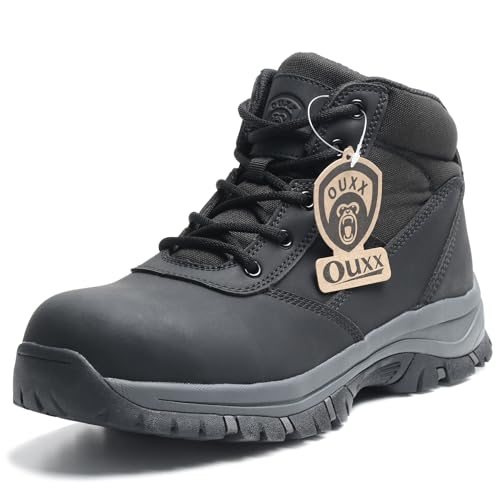
- 【ASTM CERTIFIED SAFETY TOE】Protect your feet from impact and compression with our heavy-duty steel toe cap, rigorously rated to meet ASTM F2413-18 I/75 C/75 safety standards
- 【QUICK-ACCESS SIDE ZIPPER】Experience the perfect balance of secure fit and convenience. The integrated heavy-duty side zipper allows you to slip these boots on and off in seconds
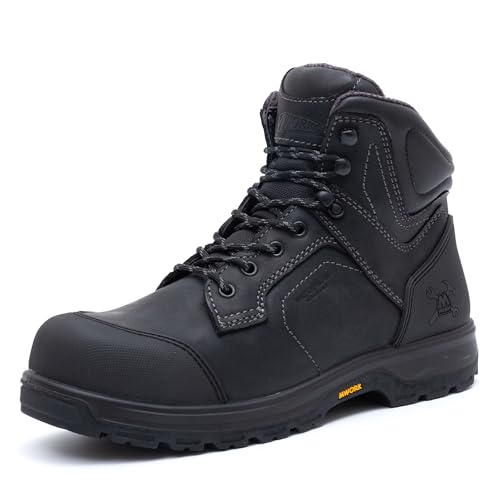
- Composite Safety Toe Boots: Features ASTM F2413-18 certified composite safety toe protection that shields your feet from impact and compression hazards without the weight and cold
- Waterproof & Durable Leather: Crafted with premium waterproof leather that keeps your feet dry and comfortable throughout the workday, protecting against moisture, rain, and wet
The Problem: Three Boots, Three Different Rating Strings
Here's the thing: two boots can both say "ASTM certified" and protect you against completely different hazards. One may be built to bleed static charge away, another to slow current from an open circuit. Those are opposite electrical behaviours, and buying the wrong one because both labels contained the letters ASTM is a genuinely common mistake.
The fix is to stop reading the marketing headline and start reading the code string itself.
What ASTM F2413 Actually Means on a Work Boot
ASTM F2413 is the specification a boot's protective features are certified against, cited by edition year. All three listings covered here reference the same 2018 edition: ROCKROOSTER states conformance to ASTM F2413-18 I/75 C/75 SD, OUXX states its steel toe cap was tested to meet ASTM F2413-18 I/75 C/75 safety standards, and MWORK states full compliance with ASTM F2413-18 standards.
Notice what the third one leaves out. MWORK's listing claims compliance without publishing the I and C class numbers that the other two spell out, so the supplied listing information does not establish which toe classes it carries.
How to Read the Code, Step by Step
- Find the standard and edition. "ASTM F2413-18" tells you which version of the specification the manufacturer is citing. If a listing names no edition at all, that is worth asking the seller about.
- Read the toe classes. OUXX's listing ties the I/75 C/75 string directly to protection from impact and compression, which is exactly what those two letters flag. The number after each letter is the class, not a measurement of your boot.
- Read the suffix codes. SD means static dissipative, the designation ROCKROOSTER states for the AK050. EH means electrical hazard, which both the OUXX and MWORK listings state.
- Note what is absent. A missing code in a listing means the listing does not state it. It is not proof the boot fails that requirement, and it is not proof it passes either. Ask before you assume.
EH Rated Boots: What the Rating Actually Covers
MWORK's listing is the most precise of the three on this point: it describes EH rated construction as offering secondary protection against open circuits for electricians and industrial workers. That word secondary is doing heavy lifting. OUXX similarly frames its EH rating as an essential safety layer for industrial environments and construction sites, not as an isolation method.
Read that as a backup, not a licence. Nothing in the supplied listing information describes either boot as a substitute for de-energizing equipment or for following your employer's lockout procedure.
Static Dissipative (SD) Boots Are Not EH Boots
SD footwear is designed to move charge, not block it. ROCKROOSTER's listing explains its SD function as releasing static electricity into the ground while driving or wearing sweaters, paired with a slip-resistant and oil-resistant TPU outsole.
If you handle sensitive electronics, work in a cleanroom, or work around flammable vapours, SD is likely the designation your safety officer wants. If your hazard is contact with an energized conductor, EH is the code to look for. Reading one as a stand-in for the other is the single most expensive misreading on this page.
SR and Slip Resistance: The Rating That Often Isn't a Rating
Here is the honest answer to the "SR slip resistant rating" question: none of the three supplied listings state an SR designation at all. They describe slip resistance as an outsole property instead. OUXX credits a rugged rubber outsole with a multi-directional tread pattern for grip on slick, oily or uneven surfaces; MWORK credits its rubber outsole with traction on oil, water and slippery terrain; ROCKROOSTER describes its TPU outsole as slip-resistant and oil-resistant.
Those are manufacturer performance claims about tread and compound, not coded certifications. Treat them as a reason to compare outsoles, not as an equivalent to a stamped standard.
Matching a Rating to Your Job
- Get your employer's written footwear requirement first. The code you need is decided by your hazard assessment, not by a product page.
- Confirm the toe class the job demands, then check the listing actually prints it.
- Confirm your electrical requirement — EH, SD, or neither — and verify the exact letters appear.
- Only then start comparing comfort, height, waterproofing and outsole design.
Tools and Products That Match Each Code
ROCKROOSTER Mens Work Boots — Best for a stated SD requirement
This is the only boot of the three whose listing prints a full code string including SD: ASTM F2413-18 I/75 C/75 SD, on a 6-inch steel toe boot with a YKK side zipper. ROCKROOSTER also lists COOLMAX fabric to move moisture away from the foot and PORON XRD for repeated impact protection and dispersing plantar pressure. One limitation to plan around: the leather is described as water resistant, not waterproof, which is a meaningfully weaker claim than the other two boots make.
OUXX 5" Steel Toe Boots For Men — Best for puncture risk underfoot
OUXX is the only one of the three whose supplied listing mentions underfoot puncture protection: a Kevlar midsole described as shielding the foot from sharp objects like nails and metal scraps, and as lighter and more flexible than steel plates. It also states EH rating plus I/75 C/75, full-grain oiled leather with a waterproof membrane, and a 5-inch height the brand positions as ankle support without full-height bulk. If your site rule specifies 6-inch or 8-inch boots, that shorter shaft is the spec to check first.
MWORK 6" Work Boots for Men - Waterproof Leather with ASTM F2413-18 Composite Safety Toe — Best for long shifts on concrete
MWORK is the composite-toe option here, and its listing puts a number on the benefit: a composite safety toe the manufacturer says is 40% lighter than steel. It also claims PORON XRD in the heel absorbing 90% of shock, a CoolMax lining, a waterproof membrane, and EH rated construction. The tradeoff is transparency: unlike the other two, this listing does not publish its I and C class numbers, so confirm them with the manufacturer if your employer requires a specific class.
> Recommended Products > > - Need SD specifically: ROCKROOSTER Mens Work Boots states ASTM F2413-18 I/75 C/75 SD. Check Price on Amazon > - Need EH plus puncture resistance: OUXX 5" Steel Toe Boots For Men states EH and a Kevlar midsole. Check Price on Amazon
Tips for Best Results
- Photograph the code on your current boots before replacing them, so you buy the same protection level.
- Treat waterproof membrane claims and "water resistant" leather claims as different specifications, because the listings word them differently on purpose.
- If two boots list the same codes, decide on fit, height and outsole design — that is where the real difference lives.
Common Mistakes to Avoid
- Assuming EH and SD are interchangeable. They address opposite electrical behaviours.
- Reading "ASTM certified" in a headline and never checking which classes follow it.
- Treating an outsole marketing claim as a coded slip-resistance certification.
- Assuming a code missing from a listing is a code the boot fails.
How We Research
This website does no product research and runs no laboratory. For this guide we read the Amazon Creators API verified product records and the published listing feature bullets for each of the three boots, retrieved 8 September 2026, and compared the exact certification language each manufacturer chose to publish. Where a listing is silent, we say so rather than filling the gap.
Final Verdict
If your requirement is written as SD, the ROCKROOSTER Mens Work Boots listing is the only one of these three that states that designation — which does not prove the others lack it, only that they do not claim it. If your requirement is EH, both the OUXX 5" Steel Toe Boots For Men and the MWORK 6" Work Boots for Men state EH rated construction, and the deciding factor becomes puncture protection versus toe weight. Choose OUXX if nails and metal scrap are underfoot; choose MWORK if a lighter composite toe over a 12-hour concrete shift matters more to you. Check Price on Amazon
Frequently Asked Questions
What does I/75 C/75 mean? The I and C flag impact and compression protection from the safety toe cap, which is how OUXX's listing describes its I/75 C/75 steel toe. The number after each letter is the class designation defined in the standard itself, not a figure the supplied listings define.
Does an EH rating mean I can work on live circuits? No. MWORK's listing describes EH rated construction as secondary protection against open circuits, and nothing in the supplied listing information presents it as a replacement for de-energizing equipment or for your employer's electrical safety procedures.
What is the difference between EH and static dissipative work boots? EH is aimed at reducing risk from contact with an open circuit, while SD is about controlling static build-up — ROCKROOSTER describes its SD function as releasing static electricity into the ground. They are different protections, and a boot claiming one does not automatically provide the other.
Is SR an official rating on these boots? None of the three listings covered here state an SR designation. All three describe slip and oil resistance as outsole properties instead, which is a manufacturer performance claim rather than a printed certification code.
Steel toe or composite toe? MWORK states its composite safety toe is 40% lighter than steel and that composite does not conduct cold and heat the way steel toes do. Steel remains the choice on the ROCKROOSTER and OUXX boots here, and both publish their I/75 C/75 classes, which the MWORK listing does not.
Where do I report a defective safety boot? Unsafe consumer products can be reported to the Consumer Product Safety Commission, and general consumer complaint guidance is available through USA.gov consumer protection. Tell your employer and safety officer first if the boots are required PPE.
Related Resources
- How to choose composite toe versus steel toe work boots
- Waterproof work boots: membranes, leather and what the claims mean
- Getting work boot fit right the first time
Sources and Methodology
No boot on this page was worn, flexed, soaked or bench-tested by this website, and we operate no test facility. What we did do is read each product's Amazon Creators API verified record and every published listing feature bullet as of 8 September 2026, then compare the certification wording line by line — which codes are printed, which are only implied, and which claims are outsole marketing rather than a stamped designation. For safety footwear that comparison is the useful part: it tells you which boot's own documentation will satisfy a written site requirement, and it tells you exactly which questions to put to the manufacturer before your first shift.