As an Amazon Associate this site earns from qualifying purchases.
Quick Picks
| Boot | Best suited to | Traction-relevant published spec | Link |
|---|---|---|---|
| Wolverine Men'sOverpass 6" Mid Composite Toe Waterproof Work Boot | Wet, oily, chemical-exposed job sites | Listing states a slip, oil, water, abrasion, and chemical-resistant outsole | Check Price on Amazon |
| NORTIV 8 Waterproof Steel Toe Work Boots for Men | Mixed indoor/outdoor terrain where a standard is wanted | Listing states a lugged rubber outsole meeting ASTM F3445-13 | Check Price on Amazon |
| Hogent Steel Toe Boots for Men | Long shifts on debris-strewn floors | Supplied listing information states no slip-resistance, tread or outsole traction spec | Check Price on Amazon |
Disclosure: We earn a small commission from qualifying Amazon purchases at no extra cost to you.
As an Amazon Associate, we earn from qualifying purchases.Last Updated: September 2026
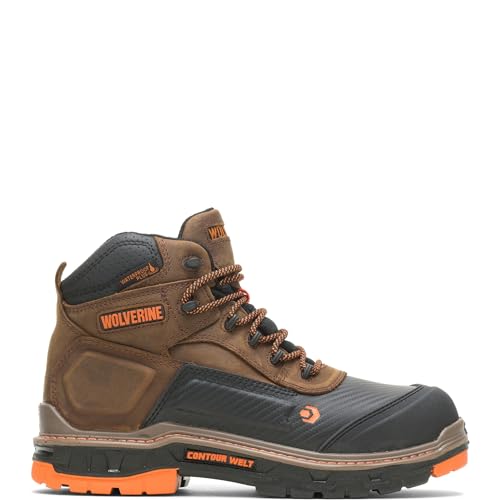
- Flexible, athletic contour welt construction moves with you by bending and flexing at essential points
- Premium waterproof leather with abrasion resistant toe
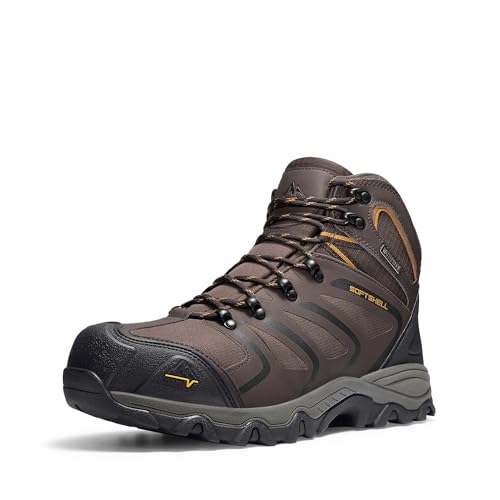
- Enhanced Toe Protection: These work boots for men feature a steel toe and rubber toe cap meets ASTM 2413-18 standard, that protect your feet from falling objects and accidental
- Waterproof Upper: With a static waterproof upper that lasts for up to 4 hours, these men's steel toe boots keep feet dry and comfortable even in wet and challenging work
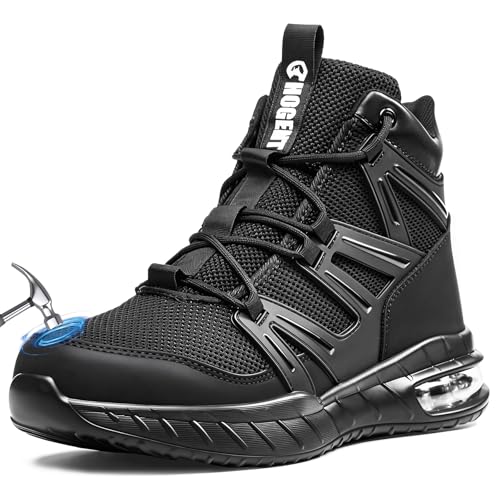
- 【STEEL TOE PROTECTION】: Hogent steel toe boots for men feature a protective steel toe cap for demanding jobs; high-top coverage adds ankle support; these steel toe shoes combine
- 【PUNCTURE-RESISTANT SUPPORT】: Built with a lightweight KEVLAR layer to help protect feet from nails and sharp objects; these work boots for men offer flexible support and
The Short Answer
Your work boots are slippery on wet floors for one of four reasons: the outsole tread has worn smooth, the rubber compound has hardened or glazed over from heat and contaminants, the sole is contaminated with oil, wax or floor finish, or the boot was never certified slip-resistant in the first place. Only one of those is genuinely fixable at home. The rest mean the boot has reached the end of its useful life for wet-floor work.
Here's the thing most people get wrong: a boot that still looks fine can be finished. Uppers outlast outsoles by a wide margin. A leather boot with a smooth, shiny contact patch on the heel is a hazard wearing a costume.
The Problem: What Actually Fails in a Slip-Resistant Outsole
Slip resistance on a wet floor is not magic rubber. It is a system: a soft-enough compound that deforms into the floor's microtexture, plus tread channels that give water somewhere to go so the sole can make contact instead of hydroplaning.
When either half of that system degrades, grip collapses.
- Tread depth is gone. Channels that once evacuated water are now shallow scratches. Water stays trapped between rubber and tile.
- The compound has glazed. Repeated heat cycles, solvents and floor chemicals can leave the contact surface hard and shiny. Hard rubber does not conform to a smooth floor.
- Contamination. Grease, wax, silicone floor finish and cutting oils fill the tread and sit on the rubber. This is the one failure mode you can genuinely reverse.
- Wrong boot for the job. A lugged outdoor sole designed for mud can behave badly on polished indoor tile, because widely spaced lugs reduce contact area on a hard smooth surface.
Step-by-Step Solution: How to Make Work Boots Less Slippery
Step 1 — Clean the outsole properly. Scrub the tread with hot water, dish detergent and a stiff brush. Dig every channel clear. Rinse and dry fully. If grip returns, the problem was contamination, not wear.
Step 2 — Do the coin test on the heel. Set a coin edge-on across the tread channels at the outside rear heel, where wear concentrates first. If the channels no longer swallow the coin's edge, the tread is functionally spent.
Step 3 — Look for shine. Tilt the sole under a light. A mirror-like contact patch means the compound has glazed. A glazed contact surface means the compound has hardened, and a hardened compound cannot be restored at home. Do not abrade or sand the outsole: that removes certified rubber you cannot get back. Ask the boot manufacturer what, if anything, they recommend, and otherwise treat a glazed sole as a replacement signal.
Step 4 — Check the sole-to-upper bond. If the outsole is separating anywhere, the boot flexes unpredictably and the tread stops loading evenly. Retire it.
Step 5 — Match the sole pattern to your actual floor. Fine, dense siping and closely spaced tread suit smooth wet indoor surfaces. Deep open lugs suit mud, gravel and loose ground. If you split your day between both, buy for the surface where a fall would hurt you most.
Step 6 — Replace when steps 1 through 4 fail. There is no home procedure that puts rubber back on a boot. Stick-on grip pads and hairspray tricks are not slip-resistance engineering, and they do not restore a certified outsole.
When to Replace Slip-Resistant Shoes
Replace when any one of these is true: tread channels at the heel or forefoot are level with the surrounding rubber, the contact surface is glazed and stays glazed after cleaning, the outsole is delaminating, or you have had a slip event on a floor you previously handled fine. That last one is the signal people ignore. A near-miss is data.
For general guidance on consumer product safety and reporting hazardous products, the U.S. Consumer Product Safety Commission publishes resources at cpsc.gov, and USA.gov maintains consumer protection information at usa.gov.
Recommended Products: Replacement Boots Worth Considering
These three are the boots covered by the listing data available for this page. Read what each listing actually claims, because the claims are not equivalent.
Wolverine Men'sOverpass 6" Mid Composite Toe Waterproof Work Boot — Best for oil and chemical exposure on wet surfaces
This is the pick when your slip problem involves more than plain water, because it is the only one of these three whose listing names chemical exposure directly. Amazon's listing for this boot describes a slip, oil, water, abrasion, and chemical-resistant outsole for added protection on the job site, and lists Composite Toe ASTM F2413-11 M I/75 C/75 EH. That EH designation refers to electrical hazard protection under the cited standard.
The listing also describes premium waterproof leather with an abrasion resistant toe, a flexible athletic contour welt construction that bends and flexes at essential points, and a removable ortholite cushioned footbed.
Strengths (per the listing): the broadest contaminant-resistance wording of the three; a composite toe, which avoids the thermal conductivity of steel; a removable footbed, which lets you swap in your own orthotic.
Limitations to know: the supplied listing information does not state a specific slip-resistance test standard or coefficient-of-friction figure for the outsole, so "slip resistant" here is a manufacturer descriptor rather than a cited test result. It also does not state a tread depth or outsole hardness.
NORTIV 8 Waterproof Steel Toe Work Boots for Men — Best for buyers who want a named slip-resistance standard
If you want a testable claim rather than an adjective, this is the one of the three whose listing cites a slip-resistance standard by number. The listing states a lugged rubber outsole meeting ASTM F3445-13 for enhanced traction and stability across all terrains, and a steel toe with rubber toe cap meeting ASTM 2413-18.
Note the waterproofing wording carefully. The listing describes a static waterproof upper that lasts for up to 4 hours. That is a bounded claim about standing water exposure on the upper, not a permanent seal and not a statement about traction.
Strengths (per the listing): a cited outsole standard; steel toe protection to a named standard; a mesh-covered EVA insole and lightweight EVA midsole aimed at fatigue from prolonged standing.
Limitations to know: a lugged outdoor pattern is optimized for terrain, and the listing's "all terrains" phrasing is the manufacturer's, not an independent finding for polished indoor tile. The 4-hour waterproof figure is the manufacturer's own bounded rating.
Hogent Steel Toe Boots for Men — Best for puncture risk on cluttered floors
Pick this one if what is under your feet is nails and swarf rather than standing water. The listing describes a lightweight KEVLAR layer to help protect feet from nails and sharp objects, a steel toe cap, and high-top coverage for ankle support.
Comfort claims center on responsive air cushioning with a breathable lining, plus lightweight EVA soles for flexible cushioning. The listing positions it for construction, warehouses, manufacturing, workshops, farming and delivery work, and says it is available for men and women.
Strengths (per the listing): the only one of these three whose supplied bullets name puncture-resistant KEVLAR construction; high-top ankle coverage; a breathable lining.
Limitations to know for a wet-floor problem specifically: the supplied listing information for this boot does not state slip resistance, an outsole standard, or waterproofing. If wet-floor traction is your reason for replacing boots, that silence matters. Buy it for puncture protection and cushioning, and confirm slip-resistance details with the manufacturer before trusting it on a wet finished floor.
Tips for Best Results
- Clean outsoles at the end of every shift where you walk through grease or floor finish. Contamination builds invisibly.
- Rotate two pairs if you work daily. Rubber and midsole foam both benefit from a full dry-out cycle.
- Keep boots away from space heaters and truck heater vents. Heat cycling is what hardens compounds.
- Inspect the outside rear heel monthly. It wears first because that is where heel strike lands.
- Match certification to hazard. A boot rated for one hazard is not rated for all of them.
Common Mistakes to Avoid
- Treating a waterproof upper as a traction feature. They are unrelated. A boot can keep your feet dry and still slide.
- Sanding the sole aggressively. You are removing the only rubber you have.
- Assuming deeper lugs mean better grip indoors. On smooth wet tile, contact area and compound matter more than lug depth.
- Waiting for a fall. Tread wear is gradual, so your gait compensates until it cannot.
- Reading "slip resistant" as a tested rating. Sometimes it is a marketing descriptor; check whether a standard is actually cited.
How We Research
This website does not perform hands-on or laboratory testing. For this page, product facts were drawn from Amazon Creators API verified product records retrieved on September 8, 2026, and from the product listing feature bullets published on each listing. Where a listing cites a standard by number, we repeat the number as the manufacturer published it and say what it covers. Where a listing uses an adjective without a standard, we say so rather than upgrading it.
Final Verdict
If wet-floor traction is the specific problem you are solving, the Wolverine Men'sOverpass 6" Mid Composite Toe Waterproof Work Boot is the most directly relevant of these three, because its listing is the only one that names slip, oil, water and chemical resistance together in the outsole description. That breadth of contaminant wording matches the failure mode most people actually face on kitchen, plant and shop floors.
If you would rather have a cited number than an adjective, the NORTIV 8 Waterproof Steel Toe Work Boots for Men listing points to ASTM F3445-13 for its lugged rubber outsole, which is a concrete reference point you can look up. And if nails, not water, are what worries you, the Hogent Steel Toe Boots for Men listing is the one naming a KEVLAR puncture-resistant layer, though its supplied bullets say nothing about slip resistance.
Whichever you choose, the underlying lesson stands: clean first, inspect honestly, and replace before the near-miss becomes a fall.
Related Resources
- How to break in new work boots
- Composite toe vs steel toe: which to buy
- Understanding ASTM footwear safety standards
Sources & Methodology
No boot on this page was worn, flexed, soaked or dragged across a wet tile by anyone here, and this website runs no lab. What we did instead was read each product's Amazon Creators API verified product record and its published listing feature bullets, retrieved September 8, 2026, and separate the claims that cite a standard by number from the claims that are simply descriptive adjectives. For slip resistance specifically, that distinction is the whole game: it tells you which of these listings is pointing at a testable benchmark and which is asking you to trust a word, and it tells you what to ask a manufacturer before you spend money on a boot for a wet floor.