As an Amazon Associate this site earns from qualifying purchases.
Recommended Products
If your boot is cemented and the upper is intact, a full replacement outsole is usually a cleaner outcome than chasing a peeling edge with glue. Three CHGCRAFT full-sole units are covered here, and the only meaningful difference between them is size and thickness.
| Replacement sole | Length x width | Thickness | Inner diameter | Link |
|---|---|---|---|---|
| CHGCRAFT Shoe Replacement Rubber Full Out Sole A Pair Leather Shoes Wear Resistant Shoes Sole Raised Shoes Sole for Work Shoes and Boots, Men, Black, 11.8x4.5inch | 11.8 x 4.52 in | 1.41 in | Not established (listing's inch and mm inner-diameter figures conflict) | Check Price on Amazon |
| CHGCRAFT Shoe Replacement Rubber Soles for DIY Shoes 1 Pair Rubber Full Out Sole Black Wear Resistant Shoes Sole Raised Shoes Sole for Work Shoes and Boots, 4.09x11.25inches | 11.25 x 4.09 in | 1.04 in | 11.02 x 3.48 in | Check Price on Amazon |
| CHGCRAFT Shoe Replacement Rubber Soles for DIY Shoes 1 Pair Rubber Full Out Sole Black Wear Resistant Shoes Sole Raised Shoes Sole for Work Shoes and Boots, 11.8x4.3inch | 11.8 x 4.3 in | 1.61 in | 11.41 x 3.81 in | Check Price on Amazon |
Disclosure: We earn a small commission from qualifying Amazon purchases at no extra cost to you.
As an Amazon Associate we earn from qualifying purchases. This page contains affiliate links, and we may receive a commission if you buy through them — at no extra cost to you.
As an Amazon Associate, we earn from qualifying purchases.
Last Updated: September 2026
Short answer: a work boot sole separating from the upper is almost always an adhesive failure, not a leather failure. If the boot is cemented construction and the upper is still sound, a clean, properly prepped re-bond or a full replacement outsole is a reasonable fix. If the midsole is crumbling, the boot is soaked in oil, or the safety toe has shifted, stop repairing and replace it.
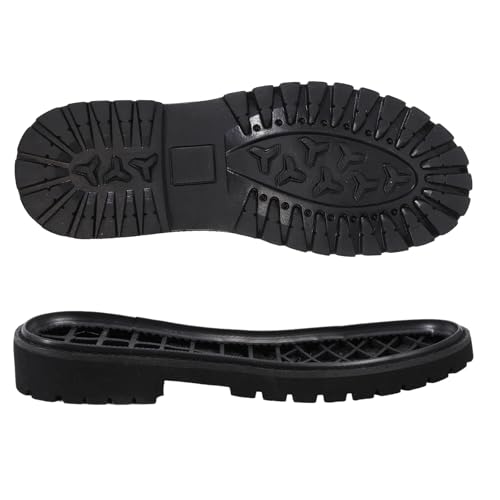
- Raised Grain Design: These shoe grips on bottom of shoes adopt a raised grain design on the surface to provide extra traction and grip to prevent you from slipping on wet floors
- Material: Made with high-quality rubber, our full sole replacement anti-slip rubber shoe repair materials are durable, comfortable and elastic to add protection to your shoes
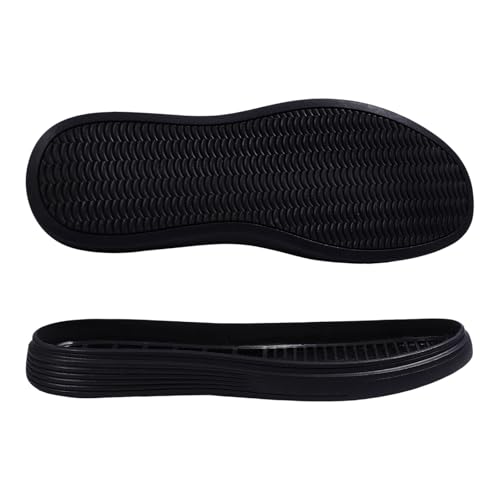
- Raised Grain Design: These shoe grips on bottom of shoes adopt a raised grain design on the surface to provide extra traction and grip to prevent you from slipping on wet floors
- Size Information: The size of shoe rubber sole is about 4.3 inches(110mm) wide, 11.8 inches(300mm) long, 1.61 inches(41mm) thick, inner diameter: 11.41x3.81 inches/290x97mm
The Problem: Why Work Boot Soles Let Go
Most failures start at the toe or along the outside edge of the forefoot, where the boot flexes hardest. Cement-construction boots hold the outsole on with adhesive alone. Heat, solvents, diesel, degreasers, repeated soaking and drying, and simple flex fatigue all attack that glue line long before the leather gives up.
Cracked wedge soles are a different animal. Polyurethane and EVA wedges harden and craze with age and UV exposure, and once a wedge cracks through, the crack keeps propagating with every step. Gluing a crack shut does not restore the foam. A cracked wedge is a resole job or a replacement job, not a touch-up job.
Goodyear welted boots rarely "delaminate" in the same way. They have a stitched welt, so a lifting outsole usually means broken stitching or a worn-out midsole — a cobbler task with a genuine repair path. That is the core of the cemented vs Goodyear welt repair question: cement construction gives you a DIY re-bond or a full replacement outsole; welted construction gives you a professional resole that can be done more than once.
Here's the thing: measure your boot's footprint before you buy anything. The listings publish an outer size, a thickness and a figure labelled inner diameter, but they do not state which of those measurements determines whether a boot will fit.
Step-by-Step: Re-Bonding a Lifting Cemented Sole
- Diagnose the construction first. Look at the edge. Visible stitching through the welt means take it to a cobbler. A smooth glue line means cement construction and a DIY re-bond is on the table.
- Open the gap fully. Peel the separation back to solid, still-bonded material. Trying to inject adhesive into a half-closed void traps air and gives you a weak spot that reopens.
- Remove every trace of old adhesive. Old cement is the failure surface. Scrape it off both faces until you reach clean substrate.
- Clean and dry. CHGCRAFT's own application guidance for its replacement soles is to clean the outsole thoroughly with water or a damp cloth, then air dry the shoe before sticking anything to it. That principle applies to a re-bond too: adhesive will not hold on a damp, oily, or dusty surface.
- Scuff both surfaces. Rubber and leather both bond better with a roughened, mechanically keyed face.
- Apply adhesive per its own label. Use a flexible shoe-repair adhesive and follow the manufacturer's instructions for open time and cure time exactly. Do not improvise a chemistry or a cure schedule.
- Clamp under even pressure and leave it alone. Wrap the whole forefoot, not just the peeled corner, and give it the full cure the adhesive label specifies before wearing.
When a Full Replacement Outsole Makes More Sense
Re-bonding buys time on a small edge lift. It does nothing for a tread that is worn smooth, a heel breast that has rounded off, or a lug pattern that has stopped biting.
That is where a full-sole unit comes in. All three CHGCRAFT soles here are described by the manufacturer as suitable for full-sole restoration and as able to re-sole work shoes and boots, and all three use a raised grain surface that the manufacturer says is meant to add traction and grip on wet floors. Whether that grain performs on your specific floor is not something a listing can establish — it is a design intent, not a slip-resistance certification.
CHGCRAFT Shoe Replacement Rubber Full Out Sole A Pair Leather Shoes Wear Resistant Shoes Sole Raised Shoes Sole for Work Shoes and Boots, Men, Black, 11.8x4.5inch — 11.8 x 4.52 inches with 1.41-inch published thickness
This is the widest of the three at 4.52 inches, on an 11.8-inch length, with a 1.41-inch thickness. The inner-diameter figure on the listing for the CHGCRAFT Shoe Replacement Rubber Full Out Sole A Pair Leather Shoes Wear Resistant Shoes Sole Raised Shoes Sole for Work Shoes and Boots, Men, Black, 11.8x4.5inch (B0DJX598KN) is internally inconsistent — it is given as "11.4x3.6inch/283x91.5mm", and 283 mm is not 11.4 inches — so that figure is not established and should be confirmed with the manufacturer before ordering. The listing for the CHGCRAFT Shoe Replacement Rubber Full Out Sole A Pair Leather Shoes Wear Resistant Shoes Sole Raised Shoes Sole for Work Shoes and Boots, Men, Black, 11.8x4.5inch (B0DJX598KN) does not state what its inner diameter figure bounds or which published measurement governs fit, so compare all of its published dimensions against your boot before ordering. The listing explicitly flags checking size information before ordering, which is a fair warning to take seriously. Check Price on Amazon
Strengths: widest published outer width of the three; manufacturer describes the rubber as durable, comfortable and elastic. Limitation to weigh: the supplied listing does not state a slip-resistance standard, hardness, or compatible adhesive.
CHGCRAFT Shoe Replacement Rubber Soles for DIY Shoes 1 Pair Rubber Full Out Sole Black Wear Resistant Shoes Sole Raised Shoes Sole for Work Shoes and Boots, 4.09x11.25inches — Smallest published footprint and thickness of the three
At 11.25 inches long and 4.09 inches wide, this is the smallest footprint of the three, and at 1.04 inches it is the thinnest. The listing for the CHGCRAFT Shoe Replacement Rubber Soles for DIY Shoes 1 Pair Rubber Full Out Sole Black Wear Resistant Shoes Sole Raised Shoes Sole for Work Shoes and Boots, 4.09x11.25inches (B0DX6C5V65) does not state how the sole seats on a boot or how much height it adds once fitted, so the published thickness on its own does not establish the change to your heel-to-toe stack. Inner diameter is 11.02 x 3.48 inches. Check Price on Amazon
Strengths: thinnest published thickness of the three at 1.04 inches; manufacturer describes the rubber as long lasting and elastic. Limitation to weigh: the smallest published inner diameter of the three at 11.02 x 3.48 inches, and the listing does not state what that measurement bounds.
CHGCRAFT Shoe Replacement Rubber Soles for DIY Shoes 1 Pair Rubber Full Out Sole Black Wear Resistant Shoes Sole Raised Shoes Sole for Work Shoes and Boots, 11.8x4.3inch — Best when you want maximum material underfoot
This one is 11.8 inches long, 4.3 inches wide, and 1.61 inches thick, with an 11.41 x 3.81-inch inner diameter. That 1.61-inch thickness is the greatest of the three, which reasonably suggests more rubber between your foot and the ground — potentially useful on hard concrete. The listing for the CHGCRAFT Shoe Replacement Rubber Soles for DIY Shoes 1 Pair Rubber Full Out Sole Black Wear Resistant Shoes Sole Raised Shoes Sole for Work Shoes and Boots, 11.8x4.3inch (B0DY7BCJWQ) does not state how much height the unit adds once fitted or how it seats on a boot, so treat the thickness as a published dimension rather than a stack-height figure. Check Price on Amazon
Strengths: thickest published profile of the three; the CHGCRAFT Shoe Replacement Rubber Soles for DIY Shoes 1 Pair Rubber Full Out Sole Black Wear Resistant Shoes Sole Raised Shoes Sole for Work Shoes and Boots, 11.8x4.3inch (B0DY7BCJWQ) publishes an inner diameter of 11.41 x 3.81 inches. Limitation to weigh: the listing does not state how much height the unit adds once fitted, and it does not state a weight.
Tips for Best Results
- Measure your boot bottom before ordering and compare it against every figure the listing publishes — outer length and width, thickness, and the figure labelled inner diameter. The listings do not state which of those measurements governs fit.
- Prep beats product. The manufacturer's instruction to clean thoroughly and air dry before sticking is the step most rushed repairs skip.
- Do the pair, not the boot. Re-soling one side leaves you walking on two different stack heights.
- Composite or steel toe boots: if the toe cap has shifted or the boot took a crushing impact, protective footwear is safety equipment. Replace it. The CPSC exists precisely because compromised protective gear is a hazard, not an inconvenience ([S1]).
Common Mistakes to Avoid
- Gluing a cracked wedge shut. The foam is degraded through its thickness. Adhesive on the surface does not fix it.
- Using household super glue. Rigid adhesive on a flexing sole cracks at the first full stride.
- Skipping the scuff. Smooth rubber gives adhesive almost nothing to key into.
- Wearing the boot before full cure. Follow the adhesive maker's cure time, not your shift schedule.
- Repairing a boot whose upper is failing. Cracked flex creases, a torn heel counter, or a delaminating safety toe mean the boot is done.
When to Replace Work Boots Instead
Replace, don't repair, when: the midsole crumbles under thumb pressure; the safety toe has taken an impact; the upper has cracked through at the flex point; the boot has been saturated with fuel or solvent; or the insole board has gone soft and lets nails or screws through. Those are structural failures. For anything you bought as certified protective footwear, buying replacements from a legitimate seller matters — general consumer-protection guidance is available through USA.gov ([S2]).
How We Research
This website does not perform product research. For this page, product facts come from two source types only: Amazon Creators API verified product records and published product listing feature bullets, retrieved 2026-09-08. Dimensions, thicknesses, inner diameters and material descriptions are quoted from those listings and attributed to the manufacturer. Where a listing does not state something — hardness, slip-resistance certification, weight, compatible adhesive — that is noted rather than guessed.
Final Verdict
Diagnose construction first, because it decides everything. Welted boot with a lifting sole? Cobbler. Cemented boot with a small edge lift and good tread? Clean, scuff, glue, clamp, cure. Cemented boot with worn-out tread and a sound upper? A full-sole unit is the honest fix.
Of the three, the CHGCRAFT Shoe Replacement Rubber Soles for DIY Shoes 1 Pair Rubber Full Out Sole Black Wear Resistant Shoes Sole Raised Shoes Sole for Work Shoes and Boots, 4.09x11.25inches publishes the smallest footprint and the lowest thickness of the three, at 11.25 x 4.09 inches and 1.04 inches thick, though its listing does not state how much height the unit adds once fitted. The 11.8x4.5inch version (B0DJX598KN) publishes an outer size of 11.8 x 4.52 inches and a 1.41-inch thickness; its listed inner diameter ("11.4x3.6inch/283x91.5mm") is internally inconsistent, so that figure is not established and needs confirming with the manufacturer. And if you want the most rubber underfoot on concrete, the 1.61-inch-thick 11.8x4.3inch version is the one. None of that overrides the rule that matters most: if it is a safety boot and its protection is compromised, replace it.
Sources & Methodology
Nobody at this website has worn, glued, clamped or cut any of these soles — there is no workshop here and no lab. What was done is a close reading of each ASIN's Amazon Creators API verified product record and its published listing feature bullets, retrieved 2026-09-08, with the three units compared on the only attributes their manufacturer actually publishes: length, width, thickness and inner diameter. That is enough to tell you each unit's published dimensions, and it is not enough to tell you how much height a resole will actually add, how long the rubber lasts on a jobsite or how it grips a specific wet surface — the listings publish no hardness figure, no wear rating and no slip-resistance certification for any of the three.